Blog
Exercise and Brain Health: What the Research Says
Exercise and brain health are linked: HHS says physical activity lowers the long-term risk of dementia, including Alzheimer's disease, in adults. The target is 150 to 300 minutes a week of moderate activity such as brisk walking, plus muscle-strengthening on at least 2 days. Activity beats any supplement for this goal.
Written by the Synaptril label deskUpdated · 4 min read
The research01
Does exercise help brain health?
Yes, in the sense that matters most: HHS says physical activity lowers the long-term risk of dementia, including Alzheimer's disease (HHS, Physical Activity Guidelines).
The same guidelines list immediate benefits, such as less anxiety and better sleep quality. Physical inactivity is one of the 14 risk factors in the Lancet Commission's 2024 report (Lancet Commission 2024, Dementia).
Exercise is not a proven treatment for memory loss, and we do not say so. It is a risk-lowering habit, and a cheap one. Normal changes with age are covered in memory and aging. See more in brain health habits.
Targets02
How much exercise helps the brain?
Adults need at least 150 to 300 minutes a week of moderate aerobic activity, plus muscle-strengthening on at least 2 days (HHS, Physical Activity Guidelines).
| Type | Target | Example |
|---|---|---|
| Moderate aerobic | 150 to 300 minutes | Brisk walking 30 minutes, 5 days |
| Vigorous aerobic | 75 minutes (Mayo Clinic) | Jogging 25 minutes, 3 days |
| Muscle-strengthening | 2 or more days | Body weight or bands |
Targets from HHS (HHS, Physical Activity Guidelines) and Mayo Clinic (Mayo Clinic, Memory tips). Ask your doctor before starting if you have a health condition.
Start small03
How can you start exercising for brain health?
Start with a walk you can keep. Ten minutes after meals, three times a day, adds up to 30 minutes.
Pick a walk
Brisk means you can talk but not sing.
Build to 150
Add 5 minutes a week until you reach 30 minutes on 5 days.
Add strength
Two short sessions a week meet the guideline (HHS, Physical Activity Guidelines).
Harvard Health recommends regular aerobic exercise and a plant-based diet over brain supplements (Harvard Health, Brain supplements).
Synaptril: from $49 a bottle30 capsules · 2, 3 or 6 bottles · free shipping on 3 or 6 · 60-day guarantee
See packsOur product04
Does Synaptril replace exercise for brain health?
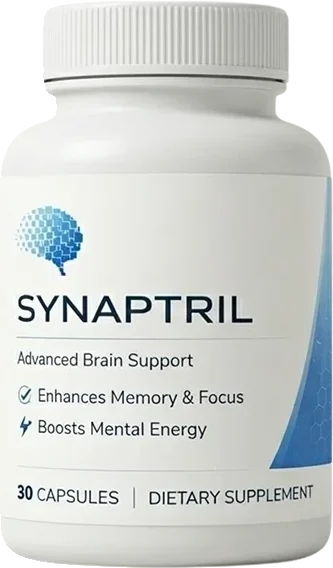
No. Synaptril is a once-a-day capsule, and nothing on its label replaces activity.
It lists 80 mg of magnesium and a 575 mg blend with no single amounts printed. No supplement has conclusive proof for protecting thinking (NCCIH, Supplements and cognition). If you do take it, ask your pharmacist about interactions first.
Never stop or change a prescription because of a supplement or an exercise plan. Ask your prescriber.
Safety05
When should you check with a doctor before exercising?
Check first if you have a heart condition, diabetes, dizziness or a long break from activity.
Stop and call 911 for chest pain, sudden confusion, trouble speaking or one-sided weakness.
FAQ06
Exercise and brain questions
Is walking enough exercise for brain health?
Brisk walking counts. HHS names it as an example of moderate aerobic activity, and adults need 150 to 300 minutes a week of it (HHS, Physical Activity Guidelines). Add muscle-strengthening on 2 days to meet the full guideline.
How soon does exercise help the brain?
Some benefits are quick. HHS lists reduced anxiety and better sleep quality as immediate benefits, while lower dementia risk is a long-term benefit (HHS, Physical Activity Guidelines). Our sources give no timeline for memory scores.
Does strength training matter for the brain?
The HHS guideline includes muscle-strengthening on at least 2 days a week for adults (HHS, Physical Activity Guidelines). Our sources do not isolate its effect on thinking, so treat it as part of the whole plan.
Can exercise replace brain supplements?
For most people, it is the better first step. Harvard Health recommends regular aerobic exercise and a plant-based diet, and no supplement ingredient has shown it improves brain health (Harvard Health, Brain supplements). Ask a doctor about your own case.
What if I cannot reach 150 minutes a week?
Do what you can. The HHS guidelines say activity lowers risk, and a walk is better than none (HHS, Physical Activity Guidelines). Build up slowly and check with your doctor if you have a health condition.
Is exercise listed as a dementia risk factor?
Physical inactivity is one of the 14 modifiable risk factors in the 2024 Lancet Commission report. Together the 14 could account for about 45 percent of cases that might be prevented or delayed (Lancet Commission 2024, Dementia).
Who wrote this07
Written and reviewed by
Pages built from the label, the sales page and linked NIH, FDA, CDC, FTC and peer-reviewed sources.
Last updated . See our editorial standards and how we check reviews. This website is run by Getsynaptril, a stocked U.S. Synaptril counter, not by the manufacturer or the distributor. We are paid when you buy through our order links.
Keep reading
More Synaptril pages
Stocked U.S. Synaptril counter
Ready to try Synaptril?
Check your medicines first, then pick a pack. Three or six bottles ship free and cost less per bottle, and every pack carries the 60-day money-back guarantee.
- Secure BuyGoods checkout
- 60-day money-back guarantee
- Ships from the U.S.