Ingredient profile
Magnesium Glycinate for Focus: What 80 mg Can and Cannot Do
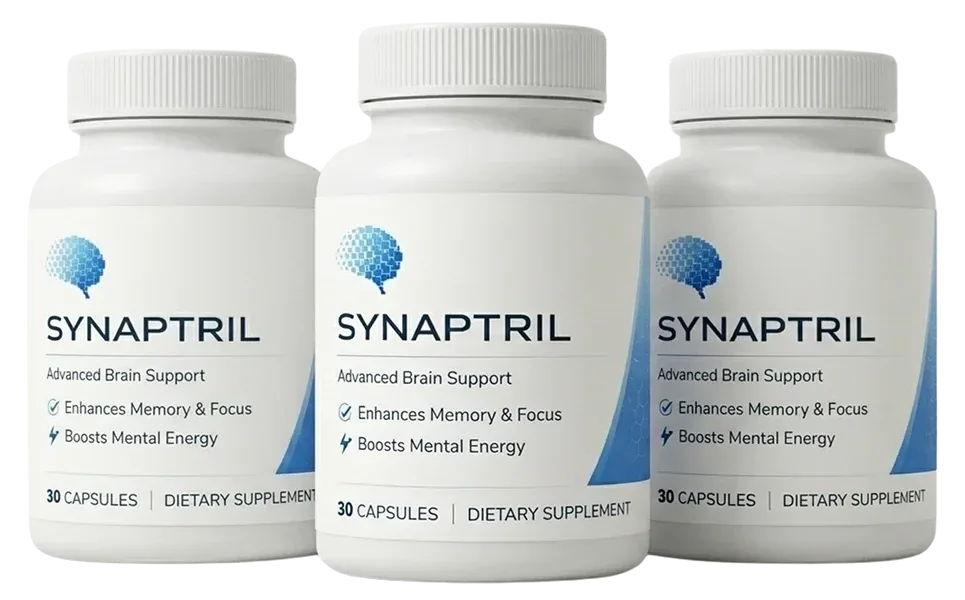
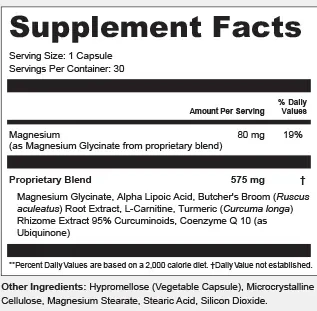
Magnesium glycinate is magnesium bound to the amino acid glycine. Magnesium glycinate for focus has little direct evidence: a 2024 review found too few trials to judge magnesium supplements for thinking. In Synaptril it is the first and heaviest blend ingredient and supplies the label's 80 mg of magnesium, about 19% of the Daily Value.
Written by the Synaptril label deskUpdated
The basics01
What is magnesium glycinate?
Magnesium glycinate is a compound of the mineral magnesium and glycine, a small amino acid. It is also sold as magnesium bisglycinate.
Magnesium itself is an essential mineral. Your nerves and muscles need it every day, and adults need 310 to 420 mg a day from all sources (NIH ODS, Magnesium).
In Synaptril, magnesium glycinate shows up twice. It heads the 575 mg blend, and the panel's magnesium line says the 80 mg comes from it. The two tables below show both lines.
| Name on the label | Magnesium (as Magnesium Glycinate from proprietary blend) |
|---|---|
| What it is | Essential mineral |
| Place on the label | Magnesium line, above the blend |
| Amount per capsule | 80 mg of elemental magnesium per capsule (19% DV) |
| Amount used in research | RDA 310-420 mg a day from all sources |
| Strength of evidence | Needed for nerves; no proof extra helps memory |
| Marketed or traditional use | Mineral for nerve and muscle function |
| Main caution | Upper limit from supplements is 350 mg a day; can loosen stools; separate from some antibiotics and osteoporosis drugs. |
| Name on the label | Magnesium Glycinate |
|---|---|
| What it is | Magnesium bound to the amino acid glycine |
| Place on the label | 1 of 6 in the 575 mg proprietary blend |
| Amount per capsule | Not listed; 1st of 6 in the 575 mg blend and the source of the 80 mg of magnesium, so about 570 mg if pure, at least 400 mg if buffered |
| Amount used in research | Dosed by its magnesium content |
| Strength of evidence | Glycinate form is not covered by NIH absorption data |
| Marketed or traditional use | Carrier for the magnesium line |
| Main caution | Same cautions as magnesium. |
The evidence02
Does magnesium glycinate help focus?
There is no good proof that magnesium glycinate helps focus in people who already get enough magnesium. The trials are too few to say.
A 2024 review in Advances in Nutrition pooled 3 randomized trials and 12 cohort studies. The authors found too few trials of magnesium supplements to draw a conclusion, and diet studies gave mixed results (Chen 2024, Magnesium and cognition).
One finding stands out. Blood magnesium had a U-shaped link with dementia risk: risk was lowest near the middle of the normal range and higher at both ends (Chen 2024, Magnesium and cognition). So low magnesium may matter, and more is not automatically better.
That fits a wider pattern. NCCIH finds no supplement proven to prevent memory decline (NCCIH, Supplements and cognition), and the AARP brain health council recommends none, except to fix a diagnosed deficiency (AARP GCBH, Brain health supplements).
The amount03
How much magnesium glycinate is in Synaptril?
Synaptril holds an estimated 400 to 570 mg of magnesium glycinate per capsule. The label prints only the magnesium it delivers: 80 mg.
The arithmetic is short. Pure magnesium glycinate is about 14% magnesium by weight (Magnesium glycinate, Mg content). To get 80 mg of magnesium, you need about 570 mg of it. Some grades are buffered with magnesium oxide and carry more magnesium. In a generous case of 20%, the capsule would need 400 mg.
Either way, magnesium glycinate is most of the 575 mg blend. That is why the five other blend ingredients have so little room.
| If the glycinate is | Magnesium glycinate | Left for the other five |
|---|---|---|
| Pure, about 14% magnesium | About 570 mg | About 8 mg |
| Buffered, 20% (a generous case) | 400 mg | 175 mg at most |
| Which one Synaptril uses | Not published | Not published |
Forms04
Magnesium glycinate vs citrate and oxide: which is absorbed best?
No one form wins on every count. NIH notes small studies where citrate, aspartate, lactate and chloride were absorbed more completely than oxide and sulfate, and it does not rate glycinate at all (NIH ODS, Magnesium).
Labels always list the elemental magnesium, not the weight of the whole compound (NIH ODS, Magnesium). So 80 mg on a glycinate label and 80 mg on an oxide label mean the same amount of the mineral.
Brands often pick glycinate for its gentle reputation. That is a fair reason, though it has not been tested head to head for focus.
Bound to glycine
Used in Synaptril. Low magnesium share by weight, so it takes up room. Not covered by NIH absorption data.
Bound to citric acid
Among the forms small studies found better absorbed than oxide (NIH ODS, Magnesium).
Plain magnesium oxide
High magnesium share, but absorbed less completely in small studies (NIH ODS, Magnesium).
Brain fog05
Can magnesium glycinate help with brain fog?
Magnesium glycinate is not a known fix for brain fog. Brain fog has many causes, and most of them need a different answer.
Cleveland Clinic lists short sleep, poor nutrition, stress, hormone changes, low blood sugar, depression and long COVID, among others (Cleveland Clinic, Brain fog). Memory changes can also come from medicines, alcohol, thyroid problems or low vitamin B12 (MedlinePlus, Memory loss).
If fog lasts or gets worse, see a doctor. A blood test can find causes that are easy to treat. Our brain fog causes guide walks through the common ones.
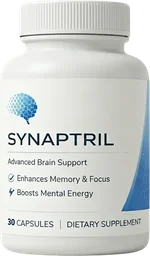
Synaptril: from $49 a bottle30 capsules · 2, 3 or 6 bottles · free shipping on 3 or 6 · 60-day guarantee
See packsSafety06
Is magnesium glycinate safe with medicines?
Magnesium glycinate is safe for most adults at 80 mg, but it can block some medicines from being absorbed. Timing is the fix.
NIH lists four groups to watch (NIH ODS, Magnesium). People with weak kidneys also face a higher risk of magnesium building up, so they should ask first.
| Medicine | What happens | What NIH suggests |
|---|---|---|
| Bisphosphonates, such as alendronate | Less of the bone drug is absorbed | Separate by at least 2 hours |
| Tetracycline and quinolone antibiotics | Less of the antibiotic is absorbed | Antibiotic 2 hours before or 4 to 6 hours after |
| Loop and thiazide diuretics | More magnesium is lost in urine | Ask your doctor about levels |
| Proton pump inhibitors, over about a year | Blood magnesium can fall | Ask your doctor about levels |
Never stop or change a prescription to make room for a supplement. Ask your pharmacist how to time the capsule around it. More detail on Synaptril side effects.
Daily total07
How much supplemental magnesium a day is too much?
For adults, more than 350 mg a day from supplements and medicines is too much. Food does not count toward that limit (NIH ODS, Magnesium).
One Synaptril capsule gives 80 mg, well under it. The risk comes from stacking. Other supplements and some medicines can carry magnesium too.
A worked example: a second product with 300 mg of magnesium plus one capsule makes 380 mg. That passes the limit. High doses commonly cause diarrhea, nausea and cramps (NIH ODS, Magnesium). Read every label you take and add the magnesium lines.
Other ingredients08
Where does magnesium fit among the Synaptril ingredients?
Magnesium is the base of Synaptril. It is the only printed amount and, as glycinate, most of the blend by weight.
The five others share what is left. See them all, with their studied doses, on the Synaptril ingredients page.
FAQ09
Magnesium glycinate: questions people ask
Does magnesium glycinate help you concentrate?
There is no solid proof that it does. A 2024 review found too few trials of magnesium supplements to judge their effect on thinking (Chen 2024, Magnesium and cognition). If you are low in magnesium, fixing that may matter; a doctor can check. For most people, sleep and activity have better evidence.
Why is glycinate used instead of magnesium oxide?
The label does not say. Glycinate is often chosen for its gentle reputation. NIH notes oxide was absorbed less completely than some forms in small studies, but it does not rate glycinate (NIH ODS, Magnesium). The trade-off: glycinate is bulky, so it fills most of the Synaptril blend.
Is 80 mg of magnesium a meaningful amount?
It is a modest top-up: 19% of the Daily Value. Adults need 310 to 420 mg a day from all sources, mostly from food (NIH ODS, Magnesium). It will not correct a real deficiency on its own, but it adds to what your diet gives.
Can magnesium glycinate make you sleepy during the day?
Drowsiness is not among the side effects NIH lists for magnesium; those are mainly diarrhea, nausea and cramps at high doses (NIH ODS, Magnesium). If you feel sleepy after the capsule, note it and talk to your pharmacist, since other medicines or poor sleep are more common causes.
What is the upper limit for supplemental magnesium?
For adults it is 350 mg a day from supplements and medicines combined. Magnesium from food does not count (NIH ODS, Magnesium). One Synaptril capsule gives 80 mg, so check any other supplement or medicine that lists magnesium.
Does magnesium glycinate cause loose stools?
It can, mostly at high doses. NIH says large amounts of supplemental magnesium commonly cause diarrhea, nausea and cramping (NIH ODS, Magnesium). At 80 mg a day the chance is lower. If stools stay loose, stop and ask a doctor, especially if you have kidney problems.
Does Synaptril's magnesium count toward the daily upper limit?
Yes. The 80 mg comes from a supplement, so it counts toward the 350 mg limit (NIH ODS, Magnesium). That leaves room for 270 mg more from other supplements or medicines. Magnesium in food is not counted.
Who wrote this10
Written and reviewed by
Pages built from the label, the sales page and linked NIH, FDA, CDC, FTC and peer-reviewed sources.
Last updated . See our editorial standards and how we check reviews. This website is run by Getsynaptril, a stocked U.S. Synaptril counter, not by the manufacturer or the distributor. We are paid when you buy through our order links.
Keep reading
More Synaptril pages
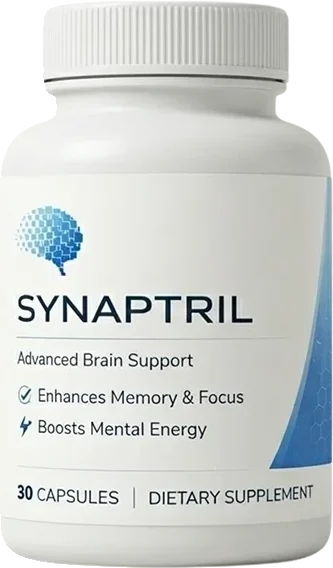
Stocked U.S. Synaptril counter
Ready to try Synaptril?
Check your medicines first, then pick a pack. Three or six bottles ship free and cost less per bottle, and every pack carries the 60-day money-back guarantee.
- Secure BuyGoods checkout
- 60-day money-back guarantee
- Ships from the U.S.