Guide
Nootropics vs Adaptogens: What Is the Difference?
Nootropics vs adaptogens comes down to the goal. A nootropic is a substance meant to support thinking, learning and memory. An adaptogen is a plant marketed to help the body cope with stress. Neither word is a legal or medical category, plants can be sold as both, and Synaptril's six ingredients are not classic examples of either.
Written by the Synaptril label deskUpdated
The short version01
What is the difference between adaptogens and nootropics?
The difference between adaptogens and nootropics is the target. Nootropics are aimed at thinking and memory; adaptogens are aimed at how the body handles stress.
A review of nootropics describes them as a varied group of substances intended to support thinking, learning and memory, especially when these are impaired (Malik 2022, Nootropics review). The word covers prescription drugs, chemical compounds and plant extracts.
"Adaptogen" is a marketing and traditional-medicine word for herbs sold to help people cope with stress, such as ashwagandha and rhodiola. That review does not define it (Malik 2022, Nootropics review), and no U.S. rule does either.
The two groups overlap. One plant can be sold as an adaptogen in one bottle and as a nootropic in another. What counts is the label: which ingredient, how much, and what the evidence says at that dose.
| Question | Nootropic | Adaptogen |
|---|---|---|
| Main aim in marketing | Thinking, learning, memory, focus | Coping with stress and fatigue |
| What it can be | Prescription drug, compound or plant extract (Malik 2022, Nootropics review) | Almost always a plant or mushroom extract |
| Legal category | None; sold as a supplement or a drug | None; sold as a supplement |
| Proven for memory decline? | No supplement is (NCCIH, Supplements and cognition) | No supplement is (NCCIH, Supplements and cognition) |
| Checked by FDA before sale? | Not as a supplement (FDA, Dietary supplements Q and A) | Not as a supplement (FDA, Dietary supplements Q and A) |
Nootropics02
What are nootropics?
Nootropics, also called smart drugs or cognitive enhancers, are substances intended to improve thinking, learning and memory.
The Malik review sorts them into four groups: classical nootropic compounds, substances that raise brain metabolism, cholinergic agents, and plants or plant extracts. It also lists side effects and reasons not to use each group (Malik 2022, Nootropics review).
In shops, "nootropic" usually means a supplement blend. Common label names include bacopa, ginkgo, phosphatidylserine, alpha GPC and huperzine A. Having the word on a bottle does not mean the product was tested. Ginkgo, for example, did not lower dementia rates in a trial of more than 3,000 older adults (NCCIH, Supplements and cognition).
Adaptogens03
What are adaptogens?
Adaptogens are herbs and mushrooms sold to help the body handle stress. Ashwagandha, rhodiola and ginseng are the best-known names on labels.
The term comes from traditional medicine and supplement marketing, not from a medical rulebook. None of our health sources defines it, and none recommends any adaptogen for memory. The AARP-convened Global Council on Brain Health does not recommend any supplement for brain health (AARP GCBH, Brain health supplements).
"Natural" does not always mean safe, and plant products can interact with medicines (NIH ODS, Supplements: What to know). St. John's wort, an herb, makes many medicines less effective (NCCIH, Using supplements wisely). Ask a pharmacist before mixing an herb with a prescription.
Timing04
How long do nootropics take to work?
There is no set time, because no supplement nootropic is proven to work. In studies that found any effect, it was measured after weeks to months, not hours, and some effects faded.
Trials of acetyl-L-carnitine ran 3 to 12 months (NIH ODS, Carnitine). A Cochrane review saw some benefit at 12 and 24 weeks but none at 52 weeks, and said the results may be due to chance (Cochrane, Acetyl-L-carnitine dementia). A curcumin trial ran 18 months and found small gains on some memory tests only (Small 2018, Curcumin memory RCT). B vitamin trials of 6 to 24 months showed no benefit (NCCIH, Supplements and cognition).
So a fair personal trial of any brain supplement lasts at least a month or two, with notes kept from day one. A clear change in a few days is more likely to come from sleep, stress or caffeine than from the capsule.
- Days 1-30
Take it as the label says. Keep a short daily note on sleep, focus and mood.
- Days 31-60
Compare your notes with the first month. Watch for side effects.
- Day 60
Decide. Synaptril's money-back guarantee window is 60 days, so judge before it closes.
Where Synaptril fits05
Is Synaptril a nootropic or an adaptogen?
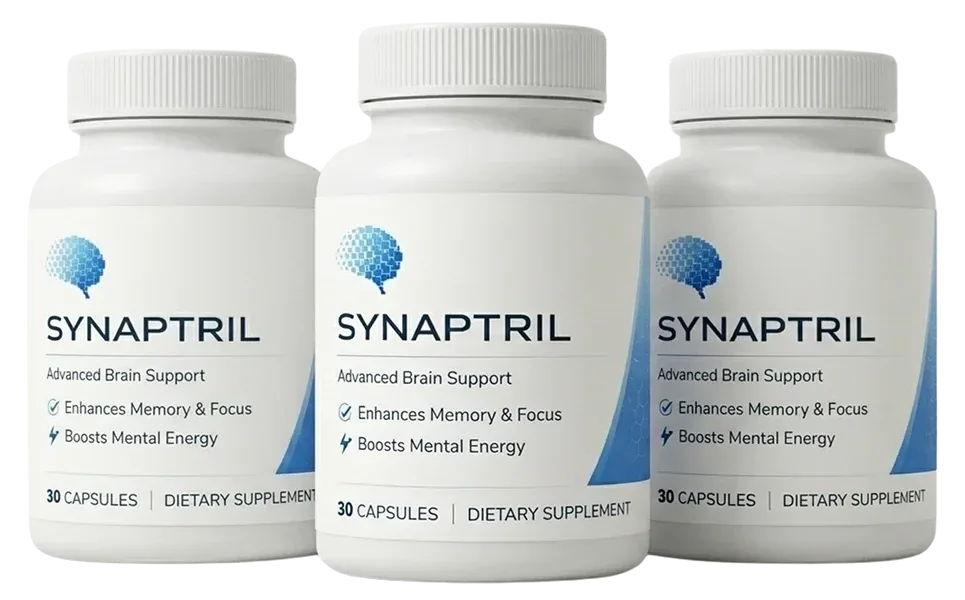
Synaptril is neither in the classic sense. It is a magnesium-based capsule, and none of its six ingredients is a typical nootropic or adaptogen.
Each capsule lists 80 mg of magnesium from magnesium glycinate, inside a 575 mg blend with alpha lipoic acid, butcher's broom root extract, L-carnitine, turmeric extract and CoQ10. There is no bacopa, ginkgo, ashwagandha or rhodiola. Most of the six are studied mainly for veins, nerves or the heart.
The front label says "Advanced Brain Support*", so the brand sells it in the brain-supplement space. No trial has tested the capsule itself. The ingredient research is on the ingredients page, and the mechanism story on how it works.
Magnesium glycinate
Supplies the 80 mg of magnesium. Trials of magnesium for thinking are too few to draw conclusions (Chen 2024, Magnesium and cognition).
Alpha lipoic acid
Mostly studied for diabetic nerve pain. No dementia trials met Cochrane's bar (Cochrane, Alpha-lipoic acid dementia).
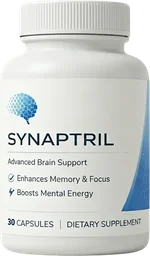
Synaptril: from $49 a bottle30 capsules · 2, 3 or 6 bottles · free shipping on 3 or 6 · 60-day guarantee
See packsDose check06
How much of each ingredient does a Synaptril capsule hold?
Only the magnesium is printed. Label arithmetic shows the other five share a small amount: about 8 mg if the glycinate is pure, and at most 175 mg in a generous case.
Pure magnesium glycinate is about 14% magnesium by weight, so 80 mg of magnesium needs about 570 mg of it (Magnesium glycinate, Mg content). A buffered grade carries more magnesium. If we assume a generous 20%, the glycinate weighs 400 mg and leaves 175 mg for the rest.
Compare that with 600 mg a day of alpha lipoic acid in small Alzheimer's studies (Linus Pauling Institute, Lipoic acid) or 1,500 to 3,000 mg of acetyl-L-carnitine in cognition trials (NIH ODS, Carnitine). Switch the assumption below to see the gap.
400 mgmagnesium glycinate, to supply the 80 mg of magnesium printed on the label
175 mgleft for alpha lipoic acid, butcher's broom, L-carnitine, turmeric and CoQ10 together
The capsule's blend weighs 575 mg. Pure magnesium glycinate is about 14% magnesium by weight; buffered versions mixed with magnesium oxide carry more (Magnesium glycinate, Mg content). The 20% case is a generous assumption, not a published figure. The label does not say which form is used, so this is arithmetic on the label, not a lab result.
Safety07
Is it safe to stack nootropics and adaptogens?
Stacking raises the number of ingredients that can interact with each other and with your medicines, so ask a pharmacist before you combine products.
Supplements can interact with medicines (NIH ODS, Supplements: What to know). Synaptril alone has known flags: CoQ10 may counteract warfarin (MSKCC, Coenzyme Q10), alpha lipoic acid may lower blood sugar (Linus Pauling Institute, Lipoic acid), and magnesium needs a gap from some antibiotics and bisphosphonates (NIH ODS, Magnesium). Adding more products adds more flags.
Never stop or change a prescribed medicine to make room for a supplement. Tell your doctor and pharmacist everything you take, and see a doctor about new or worsening memory problems, since many causes are treatable (MedlinePlus, Memory loss).
Reading labels08
How do you judge any nootropic or adaptogen label?
Judge it by the label, not the category word. Look for full amounts, doses that match studies, and honest claims.
- Is every ingredient amount printed, or hidden in a blend?
- Does each amount match the dose used in human trials?
- Does the label name a maker or a testing lab?
- Do the claims carry the FDA asterisk, without disease promises?
- Do any ingredients clash with your medicines?
FTC guidance says health claims should rest on trials of the same dose and form as the product (FTC, Health Products Compliance). See the results timeline for how to judge a trial of Synaptril.
FAQ09
Nootropic and adaptogen questions
What is a nootropic?
A nootropic is a substance intended to support thinking, learning and memory. The term covers prescription drugs, chemical compounds and plant extracts (Malik 2022, Nootropics review). As a supplement word, it is a marketing term, and no nootropic supplement is proven to prevent memory decline (NCCIH, Supplements and cognition).
What is an adaptogen?
An adaptogen is an herb or mushroom marketed to help the body cope with stress, such as ashwagandha or rhodiola. It is a traditional and marketing term, not a medical or legal category. As with any supplement, FDA does not approve adaptogens before sale (FDA, Dietary supplements Q and A).
Is rhodiola a nootropic or an adaptogen?
Rhodiola is usually sold as an adaptogen. Because plant extracts are also one of the recognized nootropic groups (Malik 2022, Nootropics review), some brands put it in focus blends too. The category word changes with the label; the plant and the evidence do not.
Can you take nootropics and adaptogens together?
Some people do, but check with a pharmacist first. Each extra ingredient is another chance for an interaction with your medicines (NIH ODS, Supplements: What to know). Start one product at a time, keep notes, and never take more than each label directs.
Are nootropics legal in the US?
Nootropic supplements can be sold legally without FDA approval, as long as they follow supplement rules (FDA, Dietary supplements Q and A). Prescription drugs used as smart drugs still need a prescription. FDA has found hidden drugs in some products sold as supplements (FDA, Tainted supplements), so buy from known sellers.
Do adaptogens help memory?
No adaptogen is proven to help memory. The Global Council on Brain Health found no supplement that prevents or slows cognitive decline and recommends none for brain health (AARP GCBH, Brain health supplements). Adaptogens are mainly sold for stress, not memory.
Who wrote this10
Written and reviewed by
Pages built from the label, the sales page and linked NIH, FDA, CDC, FTC and peer-reviewed sources.
Last updated . See our editorial standards and how we check reviews. This website is run by Getsynaptril, a stocked U.S. Synaptril counter, not by the manufacturer or the distributor. We are paid when you buy through our order links.
Keep reading
More Synaptril pages
Stocked U.S. Synaptril counter
Ready to try Synaptril?
Check your medicines first, then pick a pack. Three or six bottles ship free and cost less per bottle, and every pack carries the 60-day money-back guarantee.
- Secure BuyGoods checkout
- 60-day money-back guarantee
- Ships from the U.S.